



- Your cart is empty Browse Shop
What Is PRP Treatment for Hair Loss? Does PRP Work for Hair Regrowth?

Hair thinning can happen for many reasons, and knowing the cause helps you understand what to do for your hair. For many hair concerns, PRP treatment for hair loss is one option that may be considered following an appropriate assessment. PRP stands for platelet-rich plasma and uses a small sample of your own blood as part of the treatment. Research suggests that PRP may improve hair density in some people, although results can vary between individuals and treatment methods. This blog is presented by NY Clinic, where you will find information about what PRP treatment is, in what cases it may be considered, what services we offer, how long results may take to assess, and what to consider after PRP treatment.
What Is PRP Treatment?
PRP treatment uses platelet-rich plasma prepared from a small sample of your own blood. The blood is processed to separate the plasma and concentrate the platelets. The prepared PRP is then carefully applied to targeted areas of the scalp. Platelets contain growth factors and other substances involved in the body’s natural repair processes. For hair concerns, PRP is used with the aim of supporting the environment around existing hair follicles. It is important to understand that PRP does not work in the same way as a hair transplant and should not be described as a guaranteed way to restore lost hair.
A typical PRP hair treatment involves several simple stages:
- Blood collection: A small amount of your blood is taken.
- PRP preparation: The sample is processed to separate the platelet-rich plasma.
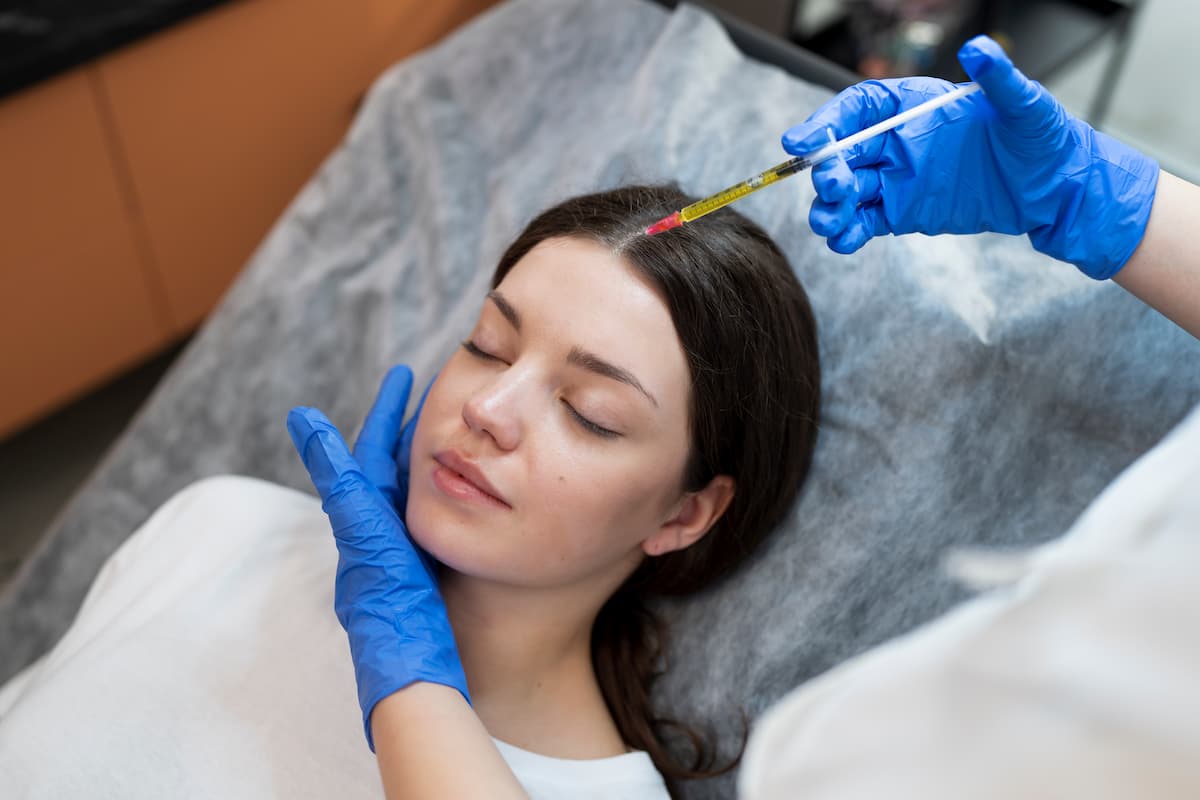
- Scalp treatment: The prepared PRP is applied through injections to selected areas of the scalp.
- Personalised treatment planning: The approach can be adjusted according to your hair concerns and treatment goals.
- Follow-up: Your response can be reviewed over time rather than judged immediately after treatment.
Our PRP Services
At NY Clinic, PRP forms part of our wider range of aesthetic treatments, with a focus on personalised care rather than a one-size-fits-all approach. Our current services include PRP for Hair and PRP for Face, allowing treatment to be discussed according to your individual concerns and goals.
- PRP for Hair: Our PRP hair treatment in Barkingside is designed for people concerned about hair thinning or reduced hair density. The treatment uses a sample of your own blood and can be discussed as part of a personalised plan for hair concerns.
- PRP for Face: PRP is also available as a skin-focused treatment at NY Clinic. While this is separate from PRP for hair loss, it uses the same basic principle of preparing platelet-rich plasma from your own blood for a personalised aesthetic treatment.
How Does PRP Help With Hair Loss?
The idea behind PRP for hair loss is to deliver a concentrated preparation of platelets to areas where the hair is thinning. Platelets contain growth factors that play a role in tissue repair and other biological processes. Researchers believe these factors may influence the environment around hair follicles and support aspects of the hair-growth cycle. However, the exact way PRP may affect hair loss is still being studied, and different treatment methods can produce different results.
Research has focused particularly on androgenetic alopecia, also known as male or female pattern hair loss. A 2024 systematic review found that several studies reported improvements in hair density following PRP, but the authors also highlighted differences between studies and limitations in the quality of the evidence.
PRP may:
- Support the environment around existing hair follicles.
- Help improve measured hair density in some people.
- Support the appearance of thicker or fuller hair.
- Be considered as part of a wider approach to managing certain types of hair loss.
- Produce different results depending on the individual and treatment method.
Does PRP Work for Hair Regrowth?
So, does PRP work for hair regrowth? The answer is that it may help some people, but results are not the same for everyone. Studies have reported improvements in hair density and other measures of hair growth, particularly in people with androgenetic alopecia. However, research also shows considerable variation in PRP preparation, injection techniques, treatment schedules, and study quality.
Hair regrowth also depends on the condition of the follicles. Where follicles remain active but produce thinner or weaker hair, supporting their surrounding environment may be more relevant than it would be in an area with long-standing complete hair loss.
When considering PRP hair regrowth, keep these points in mind:
- PRP may improve hair density in some people.
- It may help make thinning hair appear fuller.
- It does not guarantee new hair growth.
- It cannot promise complete restoration of previously lost hair.
- Results can take time to assess.
- The underlying cause of hair loss matters.
Which Types of Hair Loss May Benefit From PRP?
PRP has been studied most often for androgenetic alopecia, commonly called male or female pattern hair loss. This type of hair loss can gradually reduce hair density and cause individual hairs to become finer over time. Research also suggests potential benefits in some women experiencing hair loss, although treatment responses and study findings vary.
Potentially relevant types of hair concerns include:
- Male pattern hair loss: Gradual thinning can develop around the hairline, temples or crown.
- Female pattern hair loss: Hair may become thinner across the top of the scalp or around the parting.
- Early-stage thinning: People with existing but weakened hair follicles may be considered for treatment following assessment.
- Reduced hair density: PRP may be discussed when the main concern is a noticeable reduction in overall fullness.
What Happens During PRP Hair Treatment?
A PRP hair treatment usually begins with a consultation. This gives you the chance to explain your concerns and discuss your treatment goals. Your practitioner can then consider whether PRP is appropriate and explain what the process involves. If treatment goes ahead, a small blood sample is taken and processed to prepare the platelet-rich plasma. The prepared PRP is then injected into selected areas of the scalp.
The process generally includes:
- Consultation: Your concerns, expectations, and suitability are discussed.
- Blood sample: A small sample of your own blood is collected.
- Preparation: The sample is processed to separate the platelet-rich plasma.
- Scalp injections: The prepared PRP is delivered to the areas being treated.
- Aftercare guidance: You receive advice about looking after the treated area.
- Review: Your progress can be assessed over time.
How Many PRP Hair Treatments Are Needed?
There is no single number of PRP hair treatments that suits everyone. Research studies have used different treatment schedules, while clinics may also use different protocols. Your treatment plan can depend on the extent and pattern of hair thinning, your goals, and how you respond to treatment.
NY Clinic currently offers PRP for Hair as a single session or a three-session option. The three-session service is listed at £550, compared with £200 for one session. A consultation can help you understand which approach may be suitable rather than assuming that more sessions will always produce a better outcome.
How Long Does PRP Take to Work for Hair Loss?
PRP does not produce instant hair regrowth. Hair grows through a natural cycle, so changes in density and thickness need time to become noticeable. Research has assessed outcomes at different points, including around three and six months, with some studies reporting improvements in hair density during these periods. Your own response may differ. For this reason, it is better to judge PRP for hair loss over time rather than expecting an immediate change after one session.
Are There Any Side Effects of PRP for Hair Loss?
PRP uses a preparation made from your own blood, but that does not mean the treatment is completely free from side effects. As with other scalp injections, some people may experience temporary discomfort or local reactions. Published research has generally reported mild and short-lasting effects, although individual experiences can vary.
Possible effects can include:
- Mild tenderness around injection sites
- Temporary redness
- Minor swelling
- Bruising
- Short-term scalp discomfort
PRP Hair Treatment vs Other Hair Loss Treatments
There is no single hair-loss treatment that works in exactly the same way for everyone. PRP hair treatment is one option among several approaches that may be considered for pattern hair loss. The right choice depends on the cause of thinning, your medical history, expectations and professional advice.
| Treatment | How it is used | Main consideration | Expected approach | Suitable for everyone? |
| PRP | Uses platelet-rich plasma prepared from your own blood | Results can vary between individuals | May support hair density and thickness | No |
| Minoxidil | A topical treatment used for certain types of hair loss | Requires consistent use and may cause local effects | Aims to support hair growth and reduce progression | No |
| Medical treatment | May be prescribed or recommended for certain types of hair loss following medical assessment | Suitability and potential side effects need to be considered | Depends on the cause and treatment selected | No |
| Microneedling | Creates controlled micro-injuries in the skin | Technique and suitability matter | May be used as part of a hair-loss treatment approach | No |
| Hair transplant | Moves hair follicles from one area to another | It is a surgical procedure with its own considerations | Can redistribute existing follicles | No |
Why Choose NY Clinic for PRP Treatment?
Choosing a clinic for PRP treatment in Barkingside, Ilford should involve more than simply looking at the treatment itself. Clear information, realistic expectations and a personalised approach can help you understand your options. NY Clinic describes its approach as bespoke, relaxed and transparent, with treatment plans tailored to individual concerns and goals.
- Personalised approach
- Consultation-led care
- PRP for Hair
- Clear guidance
- Convenient local location
Does PRP really work for hair loss?
Research suggests that PRP may improve hair density in some people with androgenetic alopecia. However, studies vary in quality and treatment method, so results are not guaranteed. PRP should be considered as one possible approach rather than a universal solution for hair loss.
Does PRP help with hair regrowth?
PRP may support improvements in hair density and thickness where suitable hair follicles are still present. However, it cannot guarantee complete hair regrowth or restore every area of lost hair. Your individual response depends on several factors, including the cause and stage of hair loss.
How many PRP sessions are needed for hair loss?
The number of sessions can vary. Different studies have used different treatment schedules, and individual treatment plans depend on the person’s hair concerns and response. NY Clinic offers a single PRP for Hair session as well as a three-session option.
Is PRP better than other hair loss treatments?
There is not enough evidence to say that PRP is universally better than other hair loss treatments. Research has reported potential benefits from PRP, but results can vary depending on the treatment method, individual circumstances and underlying cause of hair loss.
Is PRP suitable for everyone with thinning hair?
No. Hair loss can have many causes, and PRP may not be appropriate for every person or every type of hair loss. A consultation can help establish whether the treatment fits your concerns. Sudden or unexplained hair loss may require further medical assessment before an aesthetic treatment is considered.
Conclusion
PRP treatment for hair loss is an increasingly researched option for people concerned about thinning hair and reduced hair density. Evidence suggests that it may help some people, particularly those with androgenetic alopecia, but the results are not guaranteed, and more research is needed to establish the best treatment methods. PRP is best approached with realistic expectations rather than promises of complete hair restoration. At NY Clinic in Barkingside, Ilford, PRP for Hair is offered as part of a personalised treatment approach. If you are considering PRP for hair regrowth, a consultation can give you the opportunity to discuss your concerns, understand the treatment, and decide whether it is right for you.
